Scapa Flow is famous as the home of the British Grand Fleet in the WW1 and North Atlantic Fleet in WWII. At the end of WW1, it was also used to inter 74 vessels of the German High Seas Fleet while the armistice was in place. Admiral von Reuter commanded the "Internmet Formation" (officially it was a detachment from the High Seas Fleet even though it contained most of the vessels) and as the Treaty of Versailles was negotiated.
Reuter believed that the fleet, the jewel in the crown of the German navy, was to be siezed, split up and distributed amongst the allies on the signing of the treaty. To prevent this, and preserve the honour of a fleet never defeated in battle, he ordered all the ships to be scuttled (sunk) on June 16th, 1919.
The majority were salvaged in the following years for their valuable metals, but a small number still remain and can be dived to this day. They are unusual in this respect, because most WW1 and WW2 wrecks are war graves and are quite rightly off-limits to divers. Since the ships in Scapa Flow were scuttled, nearly all of the crew escaped, so these are not grave sites.
The diving at Scapa Flow is magnificent, and our skipper Emily on the Radiant Queen gave us a great briefing for each dive to help us get the most out of the trip!
|
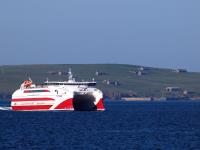
The ferry to Orkney.
|
|
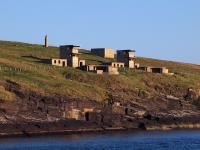
Defenses on the islands as we enter Scapa Flow.
|
|
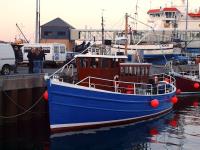
This is the Radiant Queen in Stromness harbour.
|
|
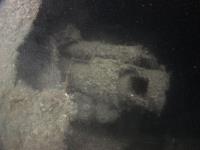
First dive and first gun - the breech of a 5.9" main gun on the light cruiser Dresden,
|
|
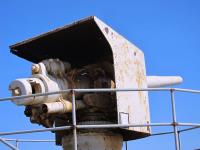
The breech of a 5.9" gun at Lyness museum.
|

|
A 5.9" gun at the museum in Lyness.
|
|
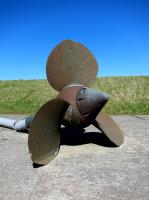
HUGE propellor at the museum - none of these left on the wrecks sadly.
|

|
WWII oil storage tank at Lyness, with a 88mm gun in front.
|

|
A barge that sank salvaging the F2 in Lyness.
|

|
Barry teaching Brian and Alison to use rebreathers, with the barge in the background.
|
|
Barry, Brian and Alison.
|

|
Alison and Brian watching as Barry demonstrates skills.
|

|
An anti-aircraft gun from the F2 (a German WWII ship) sits in the barge.
|
|
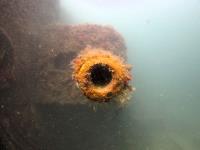
The muzzle of a gun on the F2.
|

|
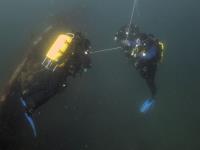
Alison and Brian on the F2.
|
|
Ascending with rebreathers...
|

|
...look, (almost) no bubbles!
|

|
Alison examines a skylight on the Coln, a light cruiser.
|
|
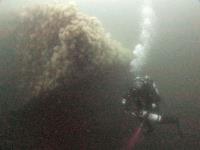
Alison at the bows of the Coln.
|
|
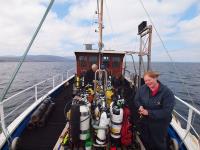
Alison back on the deck of Radiant Queen on a glorious sunny day.
|

|
Spacious dive deck on the Radiant Queen.
|
|
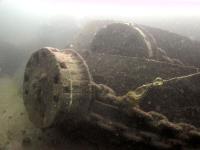
Anchor capstans on the Karlsruhe.
|

|
Chain from the anchor capstans feeds into the chain locker on the Karlsruhe.
|

|
The sharp bow of the Karlsruhe.
|
|
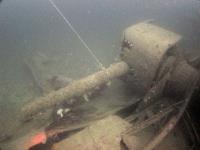
A 5.9" gun on the Karlsruhe, complete with shot line for descending and ascending divers.
|
|
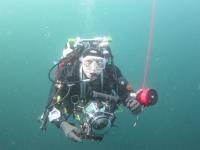
Alison doing deco stops.
|
|
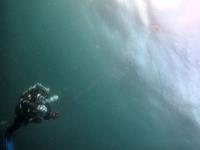
Alison fiddling with her camera on a deco stop - you can just make out the surface marker buoy at the end of her line, letting the boat know where we are.
|

|
The wonderful skipper Emily filling cylinders on another bright, sunny afternoon.
|

|
Sarah taking photos...
|
|
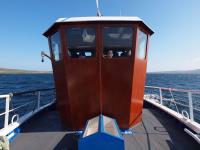
Alison driving the boat while Emily sings happily to herself in the wheelhouse.
|

|
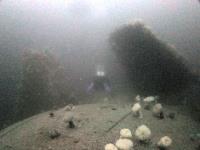
One of the 12" guns on the Kronprinz Wilhelm. The wreck is upside down, so I was in underneath it to see the guns at about 38m.
|
|
Alison swims between the rudders on the Kronprinz Wilhelm.
|

|
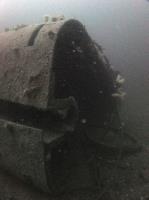
The spotting top on the Kronprinz Wilhelm - this is at the top of the mainmast.
|
|
The spotting top is made of armour plate, with viewing slits to look out through.
|
|
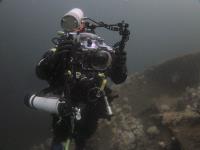
Alison with her BIG camera (severly out-camera-ing me!)
|
|
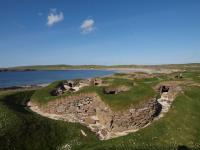
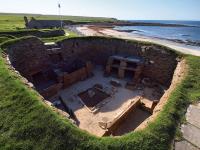
Skara Brae - a cultural outing for the evening.
|
|
Hard to imagine Skara Brae being inhabited 5000 years ago...
|
|
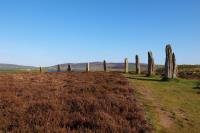
The Ring of Brodgar.
|
|
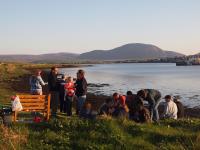
A club BBQ on the "beach".
|

|
The engine that powers the anchor capstans on the Karlsruhe
|

|
The anchor captstans on the Karlsruhe again - this time you can see the drive shaft on the closer capstan.
|
|
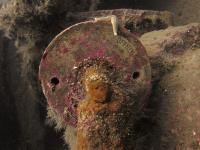
Brass doesn't corrode much - the inscription "Offnen" (Open) is clearly visible where someone has wiped away the marine life.
|

|
The "Offnen" inscription (left) is part of the mechanism of a 5.9" gun.
|

|
This is a 5.9" gin again, but here you can see the mounting pedestal disappearing deep into the bowels of the ship.
|
|
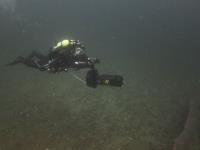
Ann zipping around on her scooter.
|

|
Paul zipping around on his scooter...
|
|
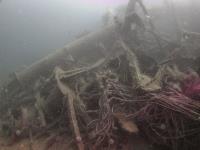
A tangle of wreckage near the engine room of the Karlsruhe.
|

|
Another 5.9" gun.
|
|
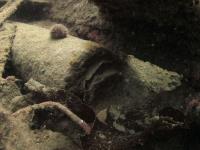
This gun still has it's tampion in place in the end - although it is pretty badly corroded.
|
|
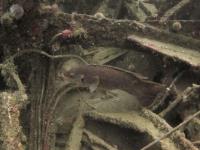
There aren't a lot of fish at this time of year, but we did see a few friendly ballan wrasse.
|
|
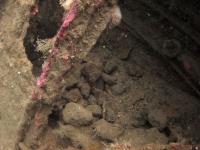
Coal spills out of the Karlsruhe.
|
|
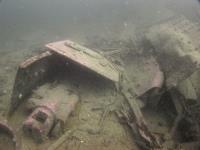
Another gun lies partly hidden in the silt next to the Karlsruhe.
|
|
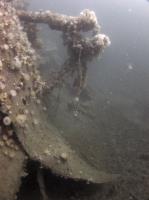
This is an A-frame on the underside of the Karlsruhe - the loop at the top once supported a drive shaft with the propellor on the end.
|
|
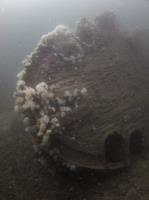
The teak planking on the stern of the Karlsruhe is still mostly in place.
|

|
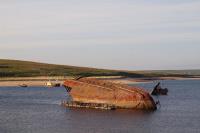
The Churchill Barriers were built to block some of the entrances to Scapa Flow to prevent raids. They replace the previous system of sinking ships across the entrances, some of which are still visible.
|
|
The remains of one of the old blockships.
|

|
The Churchill Barriers were largely constructed by Italian prisoners of war (officially they were causeways to link civilian populations on islands, so were not war work). They turned one of the camp nissen huts into theis fabulous chapel.
|

|
A neolithic burial mound.
|
|
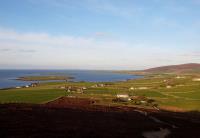
The scenery on Orkney is mostly rolling farmland.
|
|
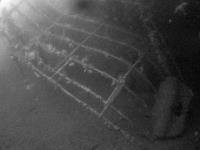
The rails around the bridge on the Brummer.
|

|
Part of the mine-laying railway on the Brummer, peeling away from the deck underneath..
|
|
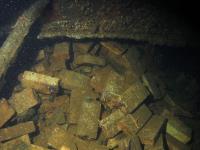
Fire bricks that surrounded the boilers on the Dresden.
|
|
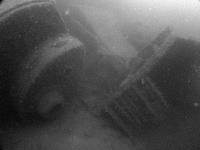
To the left is the top of the armoured conning tower on the Dresden, to the right the remains of the bridge.
|
|
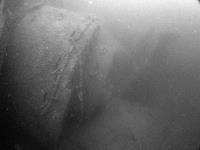
The armoured conning tower again, with the bridge just visible behind.
|

|
The bow of the Dresden (looking from the deck towards the keel) with the shield insignia clearly visible.
|
|
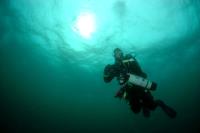
Me doing deco on the way up from the Dresden. (This photo (C) Alison Fish - reproduced here with her kind permission).
|
|
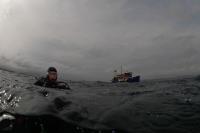
Waiting for the Radiant Queen to pick us up. (This photo (C) Alison Fish - reproduced here with her kind permission)
|

|
Torpedo tube (loading hatch) on the Coln, sticking straight up from the seabed.
|

|
The orange plumose anemones are almost like a lick of flame out of the end of this 5.6" gun.
|

|
Bollards, anchor capstand and a 5.6" gun on the stern of the Coln.
|
|
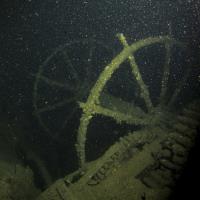
Back-up steering wheel in the bowels of the hull of the Coln - we stuck our heads in through a hole in the hull to see this.
|
|
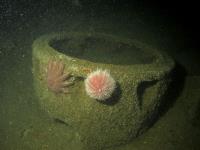
This is the nose-cap of one of the propellors, removed during salvage operations.
|

|
One of the boilers on the block-ship Tabarka, sunk to prevent raiders getting into Scapa Flow.
|
|
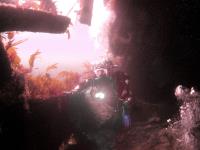
Alison by one of the large holes in the hull of the Tabarka.
|

|
There's a lot of current in the channel, so the seaweed outside the hull is flapping about.
|
|
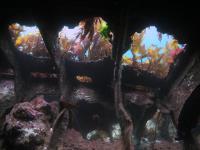
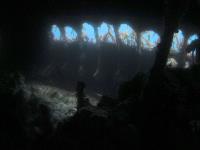
In places the hull plates have rusted pretty badly so there's lots of light in side.
|
|
It's still dark when you get away from the hull though.
|
|
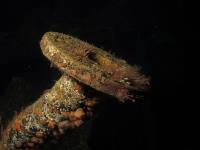
Flange.
|
|
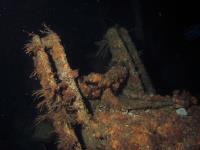
A bit of engine on the Tabarka.
|
|
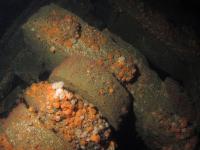
Another bit of engine on the Tabarka.
|

|
A wrasse disturbed by my torch.
|

|
Final view of the Tabarka - it's almost like a cathedral with light pouring in to the more open sections.
|